How To Win A Songwriting Contest

Gallery

This gallery contains 1 photo.

You’re reading this because you want to know how to win a songwriting contest. Having produced music that has won first place in songwriting contests, sometimes for many thousands of dollars and having also been a songwriting contest judge I … Continue reading

Doxy – Sonny Rosati – on Youtube !

Important Singing Tip – Posture Matters!

Gallery

This gallery contains 1 photo.

In a world overwhelmed with information, everyone is looking for that one singing tip that will help them gain a little higher range, or produce a more pure tone. Whether you are a novice vocalist looking to improve and develop … Continue reading

Gig Alert ! Sonny @ Solinski’s on The Drive

sonnyhornsPerformance Update !

I’ll be playing @ Solinski’s this Friday and Saturday evening (Jan 3 & 4) – on Commercial Drive, Vancouver. If you drop by please say hi !

Wishing everyone a beautiful day 

– S


Singing Audition Tips to Help You Get That Singing Career

Gallery

This gallery contains 1 photo.

If you have been following American Idol on television, you can probably point out some tips from the judges’ criticisms on the auditions and you can now probably figure out what makes them say ‘no’ to these singers trying to … Continue reading

Music is for everyone

Image

114333_20130513_114426_quotes_singing

Audition Tips for Singers Over Forty

Gallery

This gallery contains 1 photo.

The following audition tips for singers are a little different from what you will often read. They were inspired by a question from a singer who had created a video demo in order to apply for an audition set up … Continue reading

Voice Singing Tips To Help You Sing Better

Image

f599e21d4dce32b425f08537d6a63d7e

If you feel led to do something in music, and to be a good singer has been one of your frustrations, think again. Here are some voice singing tips that will help. Most professional singers are not born stars. That should be encouraging to you and not hinder you from pursuing your dreams. The fact remains constant – everyone can be a great singer regardless of age or anything. Just consider the singing tips given below that will help you to keep your enthusiasm about singing.

Tip 1: Decide whether you want to hire a singing coach or just purchase some good singing software. There are always advantages and disadvantages between the two options. A guide from a professional is always better than to work on your voice alone. But, the availability and your convenience are always at stake.

Now, if you know your capacity and you can learn better even without a coach, then buying singing software could be best for you. But, you have to monitor your progress alone or record every practice and later on ask someone who knows something about singing to get their feedback. That way you can track your rate of improvement.

Tip 2: It’s always good to get some inspiration from your favorite singer. On the other hand, if you feel sure that you want to make it in the singing industry, you have to find ways to be unique that will separate you from others. Choose songs best for your voice, your own style of music and experiment on having a different singing style that will create your own identity.

Tip 3: Take care of your asset. If for example, you gain the level of being a professional singer and you really have what it takes to be a star, never ever take for granted your voice. Smoking can worsen your voice and you are more likely to increase the rate of throat cancer. Same thing with alcohol, avoid any alcoholic drinks and caffeine because there is a tendency that your voice may get irritated.

Drinking lots and lots of water is best recommended, warm water to be in particular as cold drinks can also irritate the vocal cords. Last, don’t misuse your vocal cords like doing unnecessary loud talking. Let your voice rest, your vocal cords deserve a quality break.

Tip 4: Pay attention to all of the singing techniques and make sure you do them the right way. It’s very easy to determine whether you are doing it wrong, if you are straining your voice. Properly breathing to produce quality in your voice is always the primary concern, the correct posture, placing the tongue and soft palate in the right position, hitting the right key, improving vocal range, and many other essential techniques that every singer has to know are very important lessons that need to be taken seriously.

Tip 5: Practice, practice, and practice to master your craft. Even if you feel that you are a very confident singer. Make sure to do the warm ups properly, do the routine correctly, and never forget to do the cool down exercise right after the routine.


Want to learn more about exercises to improve singing [http://www.singinglessonstips.com/exercises-to-improve-singing]? Visit Joe’s website and get your free email course [http://www.singinglessonstips.com] and learn the techniques that the pros use.


Article Source: http://EzineArticles.com/?expert=Joe_Glavosek

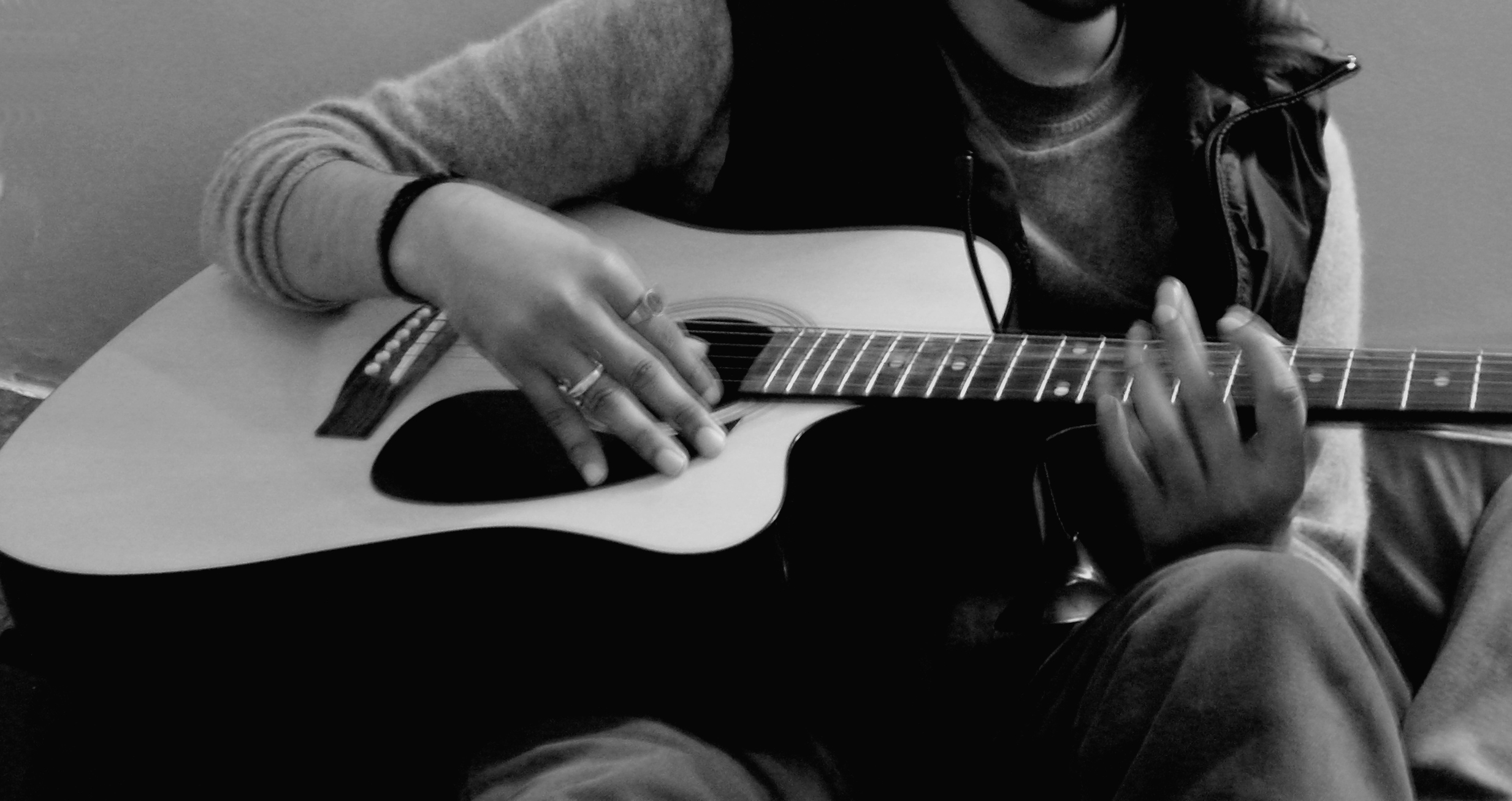
How to Prevent Wrist, Finger, and Forearm Strain When Playing Guitar

Image

Gym people stretching

It is often easy to forget how physically demanding playing the guitar can be. It is not uncommon to see guitar players who are suffering from a variety of problems, including tendonitis (an inflammation of the tendons) and carpel tunnel syndrome (when the median nerve is compressed at the wrist, leading to pain, paresthesias, and muscle weakness in the hand).These can be debilitating problems, but they are preventable. There are some important things you can do to protect yourself from having these problems now or later down the road.

First and foremost it is important to stretch before you play or practice, which not only helps to prevent injury, but will also allow you to play more effectively.
The best way to do this is to start off by stretching the fingers one by one.
Start by placing your left hand thumb against your right hand palm and pushing back slightly, not so far that it hurts but far enough so you can feel a stretch. Hold for about 30 seconds. Do this with the rest of your fingers on your left hand, and then repeat the same stretch for all the fingers on the right hand.

This next stretch is great for both your wrists and your forearms. Start by putting your palms together in front of your chest. Slowly push out your elbows and bend your wrists, holding once you feel a good stretch. Next, rotate your wrists forward so your fingers are pointing away from you. Stop and hold when you feel a stretch. After stretching it’s always a good idea to warm up by practicing a few scales, riffs, or chords.

There are some things to keep in mind when you are playing that can help to prevent any problems. First of all, try to keep your wrists as straight as possible when you are playing. When your wrists are bent it will cause unnecessary strain, and also makes it harder to move your fingers. While there are some chords or passages that require you to bend your wrists slightly, it will be better in the long run if you can keep them straight for as long as possible. Just do your best. Also, try not to press on the strings any harder than is absolutely necessary, as doing so will cause a great deal of strain.

Another important tip is to take a break. 15 mins for every hour of playing should do, but take a longer break if you have to. And if you feel any pain or discomfort whatsoever while playing it is important to stop. Trying to play through the pain will only make things worse, so do yourself a favour and stop as soon as you feel any discomfort.

Take care of your hands and wrists and you will be able to experience the joy of playing the guitar for many years to come.


Michelle is a guitarist from Québec, Canada. She is currently completing the master certificate program in guitar at the Berklee School of Music in Boston.

If you liked this article and would like to read more, then head on over to Michelle’s blog, The Guitar Player’s Guide.

http://theguitarplayersguide.blogspot.com/


Article Source: http://EzineArticles.com/?expert=Michelle_Monette

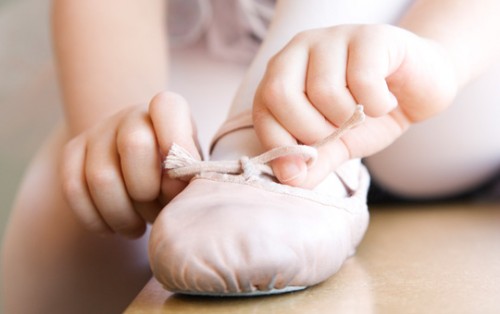
Finding The Perfect Dance Class For Children Ages 3-5

Dear bloggers & Face Book users: please help us grow our little music school by sharing and reblogging this post – thank you – S

original-500x314

Finding the perfect dance class for your child can be frustrating at times, especially if your child is very young.

Most children ages 3-5 have very short attention spans and are too immature for a one-subject class such as ballet or tap. When children are put into these serious subject classes where there are very strict techniques to learn, they often become bored, which leads to disruption in the class. These children often have bad experiences with dance class and unfortunately never return to any dance class ever again.

When observing a variety of dance classes for your young child to participate in, you should choose a class with a lot of variety. The kind of class you should look for is a one-hour class split up time-wise with various learning activities so your child is learning and doesn’t have time to get bored. For example, the dance class should be segmented into sections such as pre-ballet, tap, eurhythmics, some tumbling activities and creative work. The following are some examples:

1. Pre-ballet: This is fun and prepares the child for future more advanced techniques by learning very basic skills that will be carried through advancement. Children will learn how to make a circle and how to make the circle small and large. They will also learn how to keep the circle round while walking around in the circle. The next step will be to learn how to change the direction several times when the teacher calls. The same thing is done again. The only thing different is that the children are running gracefully on their tiptoes with their arms out. This is a great for warming up the children’s bodies and teaching them direction-change coordination.

There should be some stretching involved. Children should sit down and do some creative stretching. A good dance instructor will create some stretches while pretending to eat ice cream and do arm movements called Porte bras while pretending to be flowers, sun and moon, etc. Children also learn basic plies and tendus, but at this young age there is not great pressure to keep perfect posture.

Some other activities in pre-ballet that children enjoy are learning to skip forward, backward, in one big circle and with partners. They learn to jump facing front and back as well as jumping in a circle right and left, 4 counts to each side. They also learn to chase’ in counts of 8 changing directions from right to left.

2. Tap: Children usually stand in a straight line and learn very basic steps and sounds. Basic steps learned are toe step, heel step, hit step, side toe step, 3 toes step all alternated right and left. These steps are done in one place. The traveling step is toe-heel forward and backward. Slow shuffles, shuffle step, shuffle hop step and shuffle ball-change, in order of difficulty.

3. Eurhythmics: This is done with rhythm sticks. Children learn to count to 4 and 8 while hitting the sticks together. Counts 4 and 8 are dancers’ magic numbers. Children especially enjoy marching around the room while hitting their sticks together to the beat of the music. Further advancement includes learning waltz time.

4. Creative Movement: Examples of this would be pretending to be puppies where children would get down on their hands and feet like a puppy and walk around the room. Another example would be pretending to be a horse and have the music start at a slow pace and speed up into a fast gallop. The alligator move is a good move and also the most difficult where the children lie on the floor on their stomachs and use only their arms to drag their bodies across the floor. This is done to very slow music. All of these moves help to develop a child’s muscles and motor skills.

A dance studio in Pittsburgh, Pennsylvania has a favorite they call the butterfly kit. As the teacher hands out hand-made antennas and wings, the class talks about how butterflies become butterflies. Then the teacher asks each child to tell the class the colors that are on his or her antenna. This process gives the children a time to rest, as well as giving them some constructive talk time. The children and teacher then stand at one end of the dance studio and as the music starts they do caterpillar walks until the music changes. The change of the music signals them to spin their cocoons. When the music gets slower, the class pretends to get tired and eventually they fall asleep on the floor. The final change in the music signals them to wake up, take their wings and they are now butterflies happily fluttering around in the sky.

5. Tumbling: The tumbling section is very basic starting with log rolls down the mats on each side. Once the children master the log roll, they move on to forward rolls and backward rolls. Children also love to walk on balance beams that are very close to the floor, which is great for establishing balancing skill and coordination.

All of the ideas mentioned here are only some of the activities children will learn in a class of this nature. Children will not get bored, have fun, learn and without realizing it, develop many motor and coordination skills. There is much more that a good creative teacher can include. The activities will be more difficult for 5 year olds than for 3 year olds. These are just the basics.


Deborah Bowman has been a dance teacher/choreographer for 30 years. Born into a family of dancers, her family has owned and operated a dance studio for the past 58 years. Not only does Deborah love to teach and choreograph dance, but she also loves to write. Deborah has recently started her own home-based business. She holds a Bachelor of Science degree in Arts Management/Professional Studies from Duquesne University.

http://www.workathome-dmbunny.blogspot.com


Article Source: http://EzineArticles.com/?expert=Deborah_Bowman