The Sunny Side Music on FaceBook
Plz stay in touch by liking our Fan Page on Facebook

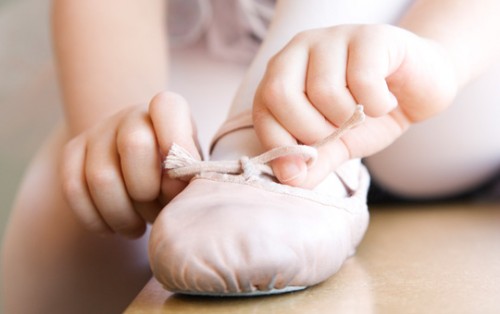
Finding the perfect dance class for your child can be frustrating at times, especially if your child is very young.
Most children ages 3-5 have very short attention spans and are too immature for a one-subject class such as ballet or tap. When children are put into these serious subject classes where there are very strict techniques to learn, they often become bored, which leads to disruption in the class. These children often have bad experiences with dance class and unfortunately never return to any dance class ever again.
When observing a variety of dance classes for your young child to participate in, you should choose a class with a lot of variety. The kind of class you should look for is a one-hour class split up time-wise with various learning activities so your child is learning and doesn’t have time to get bored. For example, the dance class should be segmented into sections such as pre-ballet, tap, eurhythmics, some tumbling activities and creative work. The following are some examples:
1. Pre-ballet: This is fun and prepares the child for future more advanced techniques by learning very basic skills that will be carried through advancement. Children will learn how to make a circle and how to make the circle small and large. They will also learn how to keep the circle round while walking around in the circle. The next step will be to learn how to change the direction several times when the teacher calls. The same thing is done again. The only thing different is that the children are running gracefully on their tiptoes with their arms out. This is a great for warming up the children’s bodies and teaching them direction-change coordination.
There should be some stretching involved. Children should sit down and do some creative stretching. A good dance instructor will create some stretches while pretending to eat ice cream and do arm movements called Porte bras while pretending to be flowers, sun and moon, etc. Children also learn basic plies and tendus, but at this young age there is not great pressure to keep perfect posture.
Some other activities in pre-ballet that children enjoy are learning to skip forward, backward, in one big circle and with partners. They learn to jump facing front and back as well as jumping in a circle right and left, 4 counts to each side. They also learn to chase’ in counts of 8 changing directions from right to left.
2. Tap: Children usually stand in a straight line and learn very basic steps and sounds. Basic steps learned are toe step, heel step, hit step, side toe step, 3 toes step all alternated right and left. These steps are done in one place. The traveling step is toe-heel forward and backward. Slow shuffles, shuffle step, shuffle hop step and shuffle ball-change, in order of difficulty.
3. Eurhythmics: This is done with rhythm sticks. Children learn to count to 4 and 8 while hitting the sticks together. Counts 4 and 8 are dancers’ magic numbers. Children especially enjoy marching around the room while hitting their sticks together to the beat of the music. Further advancement includes learning waltz time.
4. Creative Movement: Examples of this would be pretending to be puppies where children would get down on their hands and feet like a puppy and walk around the room. Another example would be pretending to be a horse and have the music start at a slow pace and speed up into a fast gallop. The alligator move is a good move and also the most difficult where the children lie on the floor on their stomachs and use only their arms to drag their bodies across the floor. This is done to very slow music. All of these moves help to develop a child’s muscles and motor skills.
A dance studio in Pittsburgh, Pennsylvania has a favorite they call the butterfly kit. As the teacher hands out hand-made antennas and wings, the class talks about how butterflies become butterflies. Then the teacher asks each child to tell the class the colors that are on his or her antenna. This process gives the children a time to rest, as well as giving them some constructive talk time. The children and teacher then stand at one end of the dance studio and as the music starts they do caterpillar walks until the music changes. The change of the music signals them to spin their cocoons. When the music gets slower, the class pretends to get tired and eventually they fall asleep on the floor. The final change in the music signals them to wake up, take their wings and they are now butterflies happily fluttering around in the sky.
5. Tumbling: The tumbling section is very basic starting with log rolls down the mats on each side. Once the children master the log roll, they move on to forward rolls and backward rolls. Children also love to walk on balance beams that are very close to the floor, which is great for establishing balancing skill and coordination.
All of the ideas mentioned here are only some of the activities children will learn in a class of this nature. Children will not get bored, have fun, learn and without realizing it, develop many motor and coordination skills. There is much more that a good creative teacher can include. The activities will be more difficult for 5 year olds than for 3 year olds. These are just the basics.
Deborah Bowman has been a dance teacher/choreographer for 30 years. Born into a family of dancers, her family has owned and operated a dance studio for the past 58 years. Not only does Deborah love to teach and choreograph dance, but she also loves to write. Deborah has recently started her own home-based business. She holds a Bachelor of Science degree in Arts Management/Professional Studies from Duquesne University.
Article Source: http://EzineArticles.com/?expert=Deborah_Bowman
 Let’s face it.. there are a bunch of us who get the butterflies before we step on stage, hit record in the studio, or read for a part at an audition. For some people this can make or break their performance before they even begin. But it’s not just about stepping in front of an audience. Some just have difficulty getting the best out of their performance in certain settings, like the studio or reading for a certain director. We understand.. & we’d like to help.
Join Master Hypnotist & Fellow Musician Collin Sonny Rosati for an afternoon of.. you guess it !
Hypnosis for Overcoming Performance Anxiety
Have you tried all of the tricks and you still can’t get the words out right? Try coming out to our Performance Anxiety class where we combine common sense and experience with Hypnosis Meditation. It might sound a little strange at first.. But Hypnosis Meditations are great for quieting the nerves – & when you quiet your nerves – your real performance can begin.
Did you know.. ?
Sonny has been a practicing Hypnotist for a long time.. It’s been almost 14 years since he left Hypnosis School and began helping with hypnosis…
Here’s a link to some of the old TV clips – http://thesunnyside.net/about/
Sonny has been bouncing around a bit this summer but he’s back home in Vancouver, and helping Actors, Musicians, Speakers, Comedians, Sales People, Teachers etc.. with Performance Anxiety.
Did you know pt2… ?
Sonny designs and writes the Hypnosis Meditations for his classes. As a Master Hypnotist, Sonny wrote a “Script Book” for practicing hypnotists and he still writes and records Hypnosis Meditations for his FaceBook page – I Love You Because..https://www.facebook.com/pages/I-love-you-because/121132551291069
Next month’s class will be.. Hypnosis to Overcome Approach Anxiety – This is based on the best of both the Inner Game Guy classes for confidence and the Romantic Magic Workshop to find true love.
Keep your eyes open for discounts through Groupon!
Want to try before you buy..? & the youtube sessions aren’t enough – check out Sonny’s Real World Vancouver Hypnosis Meetup Group that meets every Wednesday evening in Kitsilano – it’s free ! just remember to RSVP
http://www.meetup.com/internationalhypnosis/
Please register early using the form below
Cost $45 but there’s a Groupon deal available on the web!
Next Class – Sunday November 1, 2013
http://www.thesunnysidemusic.com

Presenting itself through a number of signs and symptoms, performance anxiety is a social anxiety disorder that affects people who perform in public for example; singers, actors, musicians, and public speakers or master of ceremonies. Your child may also experience this condition if s/he is made a part of the debate team or a part of the school play or such similar part. The most common root cause of this ailment is feelings of inadequacy on the part of your child. This article will reveal 7 of the most common triggers that you can learn to recognize and know if your child is suffering from performance anxiety (PA)…
1. Stage Fright…
This is one of the most common indicators of this performance anxiety according to author Martin Richfield. It mostly occurs in the form of a paralyzing fear and immobility. Your child becomes unable to move or speak; this scenario is mostly brought on due to your child’s irrational fear of humiliation or rejection by his or her classmates or playmates.
2. Lack Of Concentration…
Another common sign of PA in your child is his or her inability of to concentrate. Becoming confused of losing focus are results that can be directly traced back to feelings of fear or apprehensive thoughts which may have overtaking your child’s mind and affected his or her ability to complete the present task at hand.
3. Perspiration…
Excessive swearing from various orifices in your child’s body, particularly your hands, feet and face, is another sign that s/he might be experiencing a bout of performance anxiety. What occurs is that the brain sends signals to the body which causes “hot flashes” and results in a large volume of perspiration due to emotional stress. When this occurs, your child begins to feel uncomfortable and self-conscious.
4. Quivering…
Shaking or quaking uncontrollable is a common occurrence while experiencing PA. This shacking generally occurs around your child’s hands and knees. Adrenaline is sent through your child’s body as a defense mechanism which results in uncontrollable quivering. This is also referred to as “fight or flight” mode.
5. Dyspnea…
More commonly referred to as shortness of breath, is a very common occurrence while experiencing a bout of PA. Hyperventilation, gasping for air, an increased heart rate etc are all linked to dyspnea and occurs when your child is afraid of performing.
6. Lightheadedness…
While performing your child may become woozy or faint headed, this dizziness is a typical sign of performance anxiety and can cause your child to lose his or her balance. This is due to the brain not getting the required amount of oxygen and blood needed to function properly. Your child may begin to see a spinning hall or room and can potentially faint if the anxiety is intense.
7. Adrenaline Rush…
You will know this through your child’s increased heart rate. While experiencing PA, adrenaline will be released into your child’s body as a survival response, which is what causes the increased heart rate; in fact, the more afraid your child becomes, the faster his or her heart will beat.
Ty Lamai is an avid researcher and writer with in-depth knowledge spanning a wide variety of topics. He has hundreds of articles published online and has a blog dedicated to info about performance anxiety in children [http://analyze-more.com/anxietyblog/how-to-treat-performance-anxiety-do-this-and-your-next-performance-will-be-a-hit%e2%80%a6guaranteed] which you should visit today.
Article Source: http://EzineArticles.com/?expert=Ty_Lamai

You have probably heard the phrase that most people would rather die than present the eulogy at the funeral. Yes, public speaking brings on performance anxiety (a form of social anxiety disorder) in most of us. Performing artists, job interviewees, sports people and exam participants are also performers and are susceptible to performance anxiety.
While many of us feel anxious when we have to perform, anxiety itself is not bad. When you are stimulated, scared or anxious a flood of adrenaline and cortisol is released into your body. This prepares
you to give the highest performance, one with excitement and focus. So anxiety does serve a purpose. Most experienced performers feel concerned if they do not feel any anxiety as this can lead to a flat and dull performance.
Performance anxiety is feelings of ‘butterflies in the stomach’ or in severe cases ‘stage fright’. It is the response to ‘fight or flight’.
In some people this reaction is so debilitating that they become paralyzed by fear, unable to speak or think clearly. For someone with social anxiety disorder they may even go to the extent of refusing a promotion at work if there is any likelihood of having to do a presentation at any time.
But there are ways to help prepare to perform and to lower your state of anxiety.
Change your thinking to change the way you feel. If you start thinking about your sweating palms, racing heart and wondering if you will remember your speech your attention is divided and not on the job at hand — that of giving the speech. If you are thinking about the outcome you are distracting yourself from the task. Focus on the task at hand, the presentation you are going to give. Perceive your presentation as a challenge rather than a threat.
You wouldn’t expect someone to tell you that you were useless before you went out to perform but that’s what we tend to do to ourselves — telling ourselves that we are no good at speaking, or that we’ll be glad when it’s all over. This negative self talk needs to change into something positive — “I am well prepared and will show them what I can do.”
A good way to counteract negative thinking is to practice new thinking and create new habits. For each stage of the performance process write a set of positive self talk.
1. Preparation: The time from when you know you are to give your talk until you arrive at the venue.
a. “I am looking forward to this challenge”
b. “If I feel nervous this is natural and means that the performance is important to me”
2. Before: The time before you go on stage.
a. “I have done this in practice and can do it here”
b. Remind yourself of breathing and meditation techniques to calm yourself, and breathe easily.
3. During the performance
a. “Focus on the present”
b. Remember that if you forget something your audience has no idea that it has been left out, after all you wrote the notes.
c. A tip is that pauses are effective in a speech making, use a pause to gather your thoughts.
d. Another tip is to look just above your audience’s heads. It will appear that you are looking at them.
4. After the performance
a. “What can I learn from this performance?”
b. “Next time I’ll do even better.”
The key to your presentation of course is to be prepared. And to practice, practice, practice. Self talk will not help you if you have not prepared and do not know your subject
Many well known performers have admitted to being troubled by performance anxiety. Kim Basinger Stephen Fry, Barbara Streisand, Carly Simon and even the late Pavarotti have all suffered the affliction. These performers have made a conscious effort to control their anxiety and you can too.
For more articles by Ceejay Caton please visit http://anxietyattacksymptoms.weebly.com Ceejay’s aim is to help others by sharing information with anyone experiencing anxiety disorders. It may even be a family member or a friend suffering from what is often a frightening experience.
Article Source: http://EzineArticles.com/?expert=Ceejay_Caton


 Sunny's Music Studio :) Professional Music Lessons now Online !